
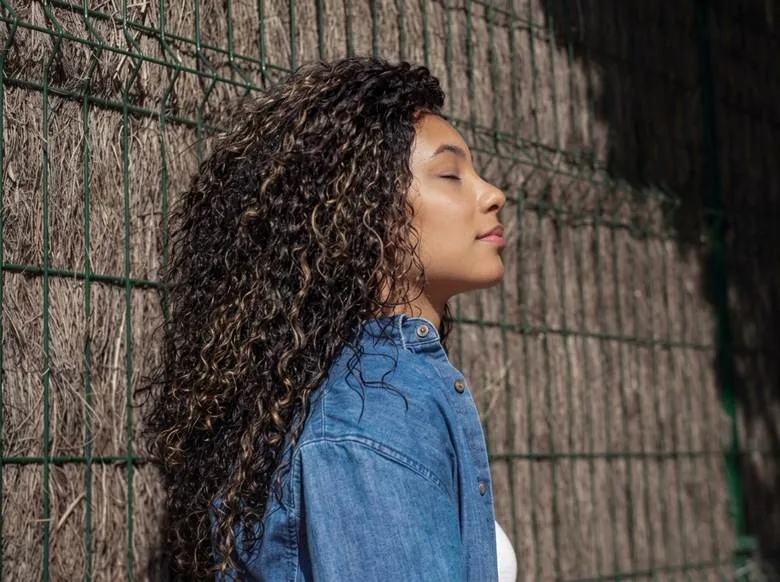
Finding curly extensions that genuinely disappear into your natural hair takes more thought than simply choosing a curl labeled “curly.” For women with 3B–3C textures, the most believable result comes from considering curl diameter, density, movement, length, and how the hair responds to moisture. Your own curls may be tighter around the crown, looser near the nape, or more defined in certain areas, so perfectly uniform extensions can sometimes look less natural than hair with subtle variations. The goal is not to make every strand identical. It is to create a finished style where your natural hair and the added hair move, fall, and frame your face as though they belong together.
Start With Your Natural 3B–3C Curl Pattern
Textured and natural hair often contains several curl shapes on the same head, especially within the 3B–3C range. Some sections may form springy ringlets while others have tighter corkscrews or softer curls. This is why Raw Burmese Curly Bundles can be especially appealing when you want dimensional texture instead of curls that appear overly manufactured. The slight variation found in genuine raw hair can help create a more realistic transition between your leave-out and the extensions.
Before selecting your bundles, look at your own hair both freshly washed and completely dry. Wet curls often appear longer and more defined, while dry curls may shrink, expand, or become fuller. Your extension choice should complement how you normally wear your hair, not simply how your curls look immediately after applying water or styling products.
Pay attention to three details when comparing textures:
● Curl diameter: Compare the width of your natural ringlets with the extension curl rather than relying only on curl-type labels.
● Shrinkage: Consider how much your own hair shortens as it dries.
● Volume: Decide whether your natural texture dries compact and defined or expands into a fuller silhouette.
Look for Dimension, Density, and Natural Movement
A natural-looking curly install should have movement. When you turn your head, separate the curls, or gently fluff the hair, the style should respond naturally instead of sitting like one solid mass. Raw curly hair can be particularly attractive because the curls may vary subtly from strand to strand, creating depth and dimension throughout the finished style.
Density matters just as much as curl pattern. Textured and natural hair often carries visual fullness even when the individual strands are fine, so extensions that are too sparse may expose obvious differences between your leave-out and installed hair. On the other hand, adding excessive volume can overwhelm your natural density. When exploring Curly Hair Extensions, consider how much fullness you actually need to recreate the shape of your own hair rather than automatically choosing the maximum amount possible.
Remember that genuine raw hair does not necessarily look factory-perfect. One bundle may have slightly tighter sections while another may contain a few looser curls. When the variations remain within the same overall texture family, this can actually make the installation look more believable because naturally growing curls rarely repeat themselves in an identical pattern from root to end.
Choose Length Based on the Hair in Its Curly State
Length can be misleading when shopping for curly textures because extensions are generally measured while stretched straight. A bundle labeled 20 inches will appear considerably shorter once the curls return to their natural formation. The tighter and springier the pattern, the more visual length can be lost through shrinkage.
If your priority is blending rather than dramatic length, compare where your natural curls fall when dry with where you want the finished style to sit. Someone whose curls rest near the shoulders may prefer extensions that create only a modest increase in length, while someone seeking a longer layered look can combine lengths to produce a softer transition.
Using more than one length can also create a naturally graduated shape. For example, shorter hair around the upper sections can contribute fullness while longer bundles create movement through the bottom. Your stylist can then shape and layer the finished installation so that the extensions complement your face and natural curl placement rather than falling in one heavy line.
The Beauty Bottom Line
The best 3B–3C blend is rarely created by chasing perfect curl uniformity. Instead, focus on harmony. The added hair should have a similar curl size, comparable fullness, realistic movement, and a dry-state appearance that works with your own texture. Slight differences can actually make the finished result more convincing when they resemble the natural variations already present in curly hair.
Once installed, styling both your natural hair and extensions together can make the transition even softer. Lightly misting the hair, applying compatible curl products, finger-coiling a few sections, or gently separating selected curls can help bring the two textures together. Avoid forcing every curl into exactly the same shape, because a little individuality is part of what makes naturally textured hair beautiful.
Most importantly, choose your extensions according to the hair you actually have and the way you genuinely wear it. Look at your curl pattern when wet and dry, consider your preferred density and finished length, and embrace dimensional texture rather than expecting every strand to behave identically. When those details work together, your installation can look less like added hair and more like a fuller, longer continuation of your own 3B–3C curls.